Green supply chain management is no longer just a sustainability initiative; it’s become a core business priority for manufacturers. LMK Recruiting helps manufacturers address talent gaps in critical areas like sustainable supply chain roles. As companies work to reduce environmental impact, meet ESG requirements, and build more resilient operations, one challenge keeps surfacing: finding and hiring the right talent to support green supply chain strategies.
For many manufacturers, the transition to greener supply chains isn’t limited by technology or intent; it’s limited by people. The growing demand for professionals who understand both manufacturing operations and sustainability requirements has created a talent gap that many organizations are struggling to fill.
What Is Green Supply Chain Management?
Green supply chain management refers to integrating environmental and sustainability practices across the entire supply chain from sourcing raw materials to production, logistics, and supplier management.
In manufacturing, this typically includes:
- Sustainable sourcing and procurement to reduce environmental and ethical risks
- Reducing waste and emissions across production and transportation activities
- Improving energy efficiency within manufacturing facilities and operations
- Ensuring supplier compliance with environmental standards and sustainability regulations
Unlike traditional supply chain models focused mainly on cost and speed, green supply chain management balances operational efficiency with environmental responsibility.
Why Green Supply Chain Management Matters in Manufacturing

Manufacturers are under growing pressure from multiple directions:
- Stricter environmental regulations that require compliance across production and supply chains
- Customer demand for sustainable products and transparent sourcing practices
- Investor and ESG reporting requirements that increase accountability and visibility
- Rising supply chain risks tied to climate, sourcing, and global disruptions
Green supply chain management helps manufacturers:
- Reduce carbon footprint across manufacturing and logistics operations
- Strengthen supplier accountability through sustainability standards and audits
- Improve long-term cost control by reducing waste and inefficiencies
- Protect brand reputation in increasingly sustainability-focused markets
However, achieving these goals depends heavily on having skilled supply chain professionals who understand both sustainability and manufacturing operations.
How Green Supply Chain Management Is Changing Hiring Needs
As sustainability becomes embedded in supply chain strategy, hiring requirements are evolving.
Manufacturers now need professionals who can:
- Evaluate supplier sustainability practices and assess environmental performance
- Manage compliance and reporting requirements related to ESG and regulations
- Balance environmental goals with cost reduction in manufacturing operations
- Align sustainability initiatives with production realities and operational constraints
This shift has created a talent gap, especially in manufacturing environments where sustainability expertise has historically been limited adding to existing manufacturing recruitment challenges many companies already face.
Key Roles Needed for Green Supply Chain Management

To support green supply chain management in manufacturing, companies are hiring for more specialized roles, including:
Sustainable Supply Chain Managers
Responsible for integrating sustainability into end-to-end supply chain strategy, aligning environmental goals with manufacturing performance and cost efficiency.
Green Logistics Coordinators
Focused on reducing emissions and fuel usage while improving efficiency across transportation, warehousing, and distribution networks.
Sustainable Procurement Specialists
Ensure suppliers meet environmental, ethical, and compliance standards while supporting responsible sourcing and long-term supplier relationships.
Supply Chain Analysts (ESG-Focused)
Track sustainability metrics, ESG compliance, and performance data to support reporting, audits, and continuous improvement initiatives.
These roles often require a blend of traditional supply chain experience and sustainability expertise, which can be difficult for manufacturers to find in today’s talent market.
Skills Manufacturers Look for in Green Supply Chain Talent
Hiring for green supply chain management goes beyond standard supply chain skills. Manufacturers increasingly look for candidates with:
- Sustainability and ESG knowledge to support environmental goals and reporting requirements
- Supplier evaluation and auditing experience to assess environmental and ethical performance
- regulatory compliance understanding across environmental and industry standards
- Data analysis and reporting skills for tracking sustainability metrics and performance
- Ability to reduce environmental impact without increasing costs in manufacturing operations
Candidates who can connect sustainability goals with real manufacturing constraints are especially valuable.
Challenges in Hiring for Green Supply Chain Management
Many manufacturers face similar hiring challenges when building green supply chain teams:
- Limited talent pool with both manufacturing and sustainability experience, making qualified candidates harder to find
- High competition for skilled supply chain professionals with ESG and sustainability expertise
- Difficulty validating sustainability expertise during interviews, especially without clear benchmarks
- Long hiring cycles that delay sustainability initiatives and slow operational progress
Without the right hiring strategy, sustainability goals can stall due to lack of execution capability.
How Manufacturers Can Successfully Hire Green Supply Chain Talent
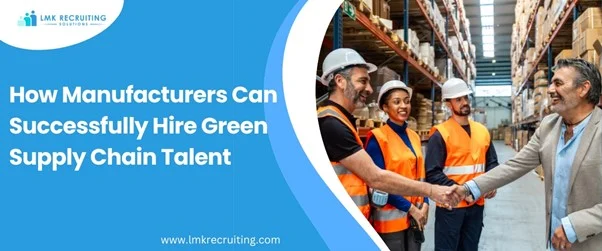
To overcome these challenges, manufacturers should:
- Clearly define sustainability responsibilities within each role to avoid skill and expectation gaps
- Focus on transferable skills, not just titles, especially when sustainability experience varies
- Assess candidates on real-world supply chain scenarios tied to environmental and operational goals
- Build long-term workforce plans aligned with sustainability goals rather than short-term hiring fixes
Most importantly, manufacturers benefit from partnering with professionals who understand both supply chain operations and talent markets, especially when outsourced recruiting can reduce hiring costs while improving access to specialized supply chain talent.
Why Specialized Recruiters Matter for Sustainable Hiring
Hiring for green supply chain management is highly specialized. General recruiting approaches often fall short because they don’t account for manufacturing complexity or sustainability requirements.
Specialized supply chain recruiters help manufacturers by:
- Accessing hard-to-find sustainability-focused talent with relevant manufacturing experience
- Evaluating both technical and environmental expertise to reduce hiring mismatches
- Reducing time-to-hire and hiring risk for critical supply chain roles
- Supporting long-term workforce planning aligned with sustainability goals
- subscription-based recruitment models that provide ongoing hiring support instead of one-off placements
For manufacturers scaling sustainability initiatives, the right recruiting partner becomes a strategic advantage, not just a hiring resource.
Conclusion
Green supply chain management is reshaping how manufacturers operate and how they hire. As sustainability expectations grow, the ability to attract and retain the right supply chain talent will determine how successfully manufacturers meet their goals.
For companies navigating this shift, investing in the right people is just as important as investing in sustainable processes. Without the right talent in place, even well-designed green supply chain strategies can struggle to deliver measurable results.
Frequently Asked Questions
Green supply chain management integrates sustainability practices across sourcing, production, logistics, and suppliers to reduce environmental impact in manufacturing.
It helps manufacturers reduce emissions, meet regulations, control long-term costs, and build more resilient and responsible supply chains.
Key skills include ESG knowledge, supplier compliance, data analysis, regulatory awareness, and strong manufacturing supply chain fundamentals.
Manufacturers now need professionals who can balance sustainability goals with cost control, compliance, and real-world production constraints.
Common roles include sustainable supply chain managers, green logistics coordinators, sustainable procurement specialists, and ESG-focused analysts.
The talent pool is limited because few candidates have both hands-on manufacturing experience and deep sustainability or ESG expertise.
Manufacturers use internal hiring teams and specialized recruiters who understand sustainability-driven supply chain roles and manufacturing operations.